


Everything You Need to Know About EPDM Rubber Roofing
Discover everything you need to know about commercial rubber roofing, from how membranes are manufactured to the key benefits. Learn more.
Everything You Need to Know About EPDM Rubber Roofing
When selecting a flat roofing system, durability, weather resistance and long-term value are among the most important considerations. Whether you’re constructing a new commercial building, refurbishing an ageing flat roof or specifying materials for a large-scale project, choosing the right waterproofing solution can make all the difference to a roof’s performance and lifespan.
Over the past few decades, EPDM roofing has become one of the UK’s most trusted flat roofing systems. Its exceptional flexibility, impressive longevity and minimal maintenance requirements have made it a preferred choice for contractors, architects and property owners alike. Suitable for both residential and commercial EPDM roofing applications, EPDM membranes provide dependable waterproof protection that stands up to the UK’s ever-changing weather conditions.
In this guide, we’ll explain what EPDM roofing is, how rubber roofing membranes are manufactured, why they have become so popular throughout the UK and the many benefits they offer over traditional roofing materials.
What Is EPDM Roofing?
EPDM stands for Ethylene Propylene Diene Monomer, a high-performance synthetic rubber membrane developed specifically for waterproofing applications. Manufactured from a carefully engineered blend of ethylene, propylene and reinforcing additives, the material offers outstanding strength while remaining highly flexible throughout its service life.
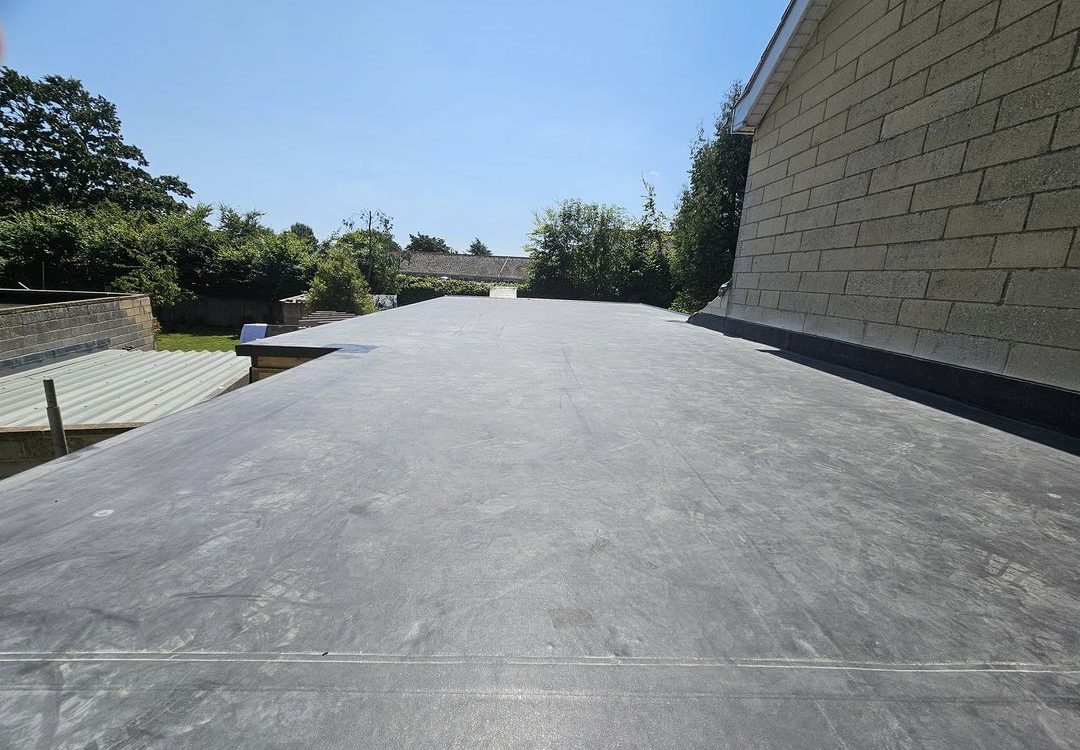
Unlike traditional felt roofing systems that rely on multiple layers of bitumen and torch-on installation methods, EPDM is supplied as a single-ply rubber membrane. Once bonded to a suitable roof deck using specialist adhesives or mechanical fixings, it creates a continuous waterproof barrier with very few seams.
One of the defining characteristics of EPDM is its ability to remain flexible in both extremely hot and freezing conditions. Rather than becoming brittle with age, the membrane naturally expands and contracts with the roof structure, helping to prevent cracking, splitting and premature failure.
These qualities make EPDM particularly well suited to the UK’s climate, where roofs must withstand heavy rainfall, frost, snow, strong winds and increasingly high summer temperatures.
How Are EPDM Roofing Membranes Manufactured?
The outstanding performance of EPDM begins with its manufacturing process.
The raw rubber compounds are carefully blended with carbon black, curing agents and specialist additives to improve strength, flexibility and resistance to UV radiation and ozone. This mixture is then formed into large sheets before undergoing a vulcanisation process.
Vulcanisation permanently cross-links the rubber molecules, creating a membrane that combines excellent elasticity with exceptional durability. The finished material is resistant to tearing, weathering and thermal movement, allowing it to maintain its waterproofing performance for decades.
Modern manufacturing techniques also allow EPDM membranes to be produced in large sheet sizes. This reduces the number of joints required during installation, minimising potential leak points while speeding up installation times.
Why Has EPDM Become So Popular in the UK?
Flat roofing technology has evolved significantly over recent decades.
Traditional felt roofing systems have served the industry well for many years, but they often require regular maintenance, periodic repairs and eventual replacement much sooner than modern roofing membranes.
EPDM has transformed flat roofing by offering a solution that combines longevity with ease of installation and excellent whole-life value.
Today, rubber roofing is widely specified because it offers:
- Exceptional lifespan
- Outstanding weather resistance
- Minimal maintenance
- Faster installation
- Excellent flexibility
- Lower lifetime ownership costs
- Improved environmental performance
For both commercial and residential buildings, these advantages make EPDM one of the most cost-effective waterproofing systems available.
How Does an EPDM Roofing System Work?
An EPDM roofing system consists of a single-ply membrane securely bonded to a prepared roof deck using specialist adhesives or mechanical fixing systems.
Once installed, the membrane forms a fully waterproof surface that prevents rainwater from penetrating the building below.
Because EPDM is available in large sheet sizes, many roofs can be covered using a single piece of membrane. This significantly reduces the number of joints and seams compared with traditional roofing systems.
With fewer joins comes a lower risk of leaks, helping to explain why EPDM has earned such an excellent reputation for long-term reliability.
The Benefits of EPDM Roofing
Outstanding Durability
Perhaps the greatest advantage of EPDM roofing is its remarkable lifespan.
A professionally installed EPDM roof can provide reliable waterproof protection for more than 50 years when properly maintained. Unlike many traditional roofing materials, EPDM retains its flexibility over time rather than becoming brittle or deteriorating through prolonged exposure to the elements.
This exceptional durability makes it an excellent long-term investment for property owners seeking dependable performance.
Excellent Weather Resistance
Roofing materials in the UK are exposed to a wide variety of weather conditions throughout the year.
Heavy rain, strong winds, freezing temperatures, UV radiation and seasonal temperature fluctuations all place significant demands on roofing systems.
EPDM has been specifically developed to resist:
- UV degradation
- Ozone exposure
- Heavy rainfall
- Snow and ice
- Wind uplift
- Thermal expansion and contraction
This makes it suitable for installations throughout the UK, from coastal locations to exposed rural sites.
Low Maintenance Requirements
One of the biggest reasons contractors and building owners choose EPDM is its low maintenance requirements.
Unlike traditional roofing systems that often require regular repairs or resurfacing, EPDM typically only needs:
- Routine visual inspections
- Occasional cleaning
- Removal of leaves and debris
- Checking drainage outlets remain clear
With fewer maintenance demands, building owners benefit from reduced ongoing costs and less disruption throughout the roof’s lifespan.
Excellent Flexibility
Every roof naturally expands and contracts as temperatures change.
Many conventional roofing materials struggle to cope with this continual movement, leading to cracks or weakened joints over time.
EPDM remains highly elastic throughout its service life, allowing it to stretch without suffering permanent damage.
This flexibility helps maintain the roof’s waterproof integrity even under challenging weather conditions.
Sustainable Roofing Solution
Sustainability continues to influence material specification across the construction industry.
EPDM offers several environmental advantages, including:
- A service life often exceeding 50 years
- Reduced replacement frequency
- Lower maintenance requirements
- Less construction waste over time
Its long lifespan significantly reduces the environmental impact associated with repeated roof replacement, making it an increasingly attractive option for environmentally conscious projects.
Fast and Efficient Installation
Compared with many traditional flat roofing systems, EPDM is relatively quick to install.
Large membrane sheets reduce the number of seams while allowing experienced installers to cover sizeable roof areas efficiently.
This can help reduce labour costs, shorten project timescales and minimise disruption to building occupants.
Where Can EPDM Roofing Be Used?
One of EPDM’s greatest strengths is its versatility.
Residential Properties
Homeowners increasingly choose EPDM for:
- House extensions
- Garages
- Garden offices
- Garden rooms
- Porches
- Dormer roofs
- Car ports
Its clean appearance, durability and minimal maintenance make it particularly attractive for domestic flat roofs.
Commercial Buildings
Commercial EPDM roofing has become a popular choice across numerous sectors because of its reliability and long service life.
Typical applications include:
- Office buildings
- Retail premises
- Warehouses
- Distribution centres
- Hotels
- Schools
- Healthcare facilities
Industrial Buildings
Industrial environments require roofing systems capable of withstanding demanding operating conditions.
EPDM performs exceptionally well on:
- Manufacturing facilities
- Factories
- Workshops
- Storage buildings
- Logistics hubs
Public Sector Buildings
Schools, universities and public buildings often specify commercial rubber roofing membranes because they offer dependable performance while helping to reduce long-term maintenance costs.
For organisations managing multiple buildings, these whole-life savings can be considerable.
Why Roofing Contractors Choose EPDM
Professional roofing contractors continue to favour EPDM because it offers practical installation benefits alongside outstanding long-term performance.
Large sheet sizes reduce installation times, while the lightweight membrane is easier to handle than many alternative roofing materials.
Fewer seams mean fewer opportunities for future leaks, and the material is relatively straightforward to detail around roof penetrations, skylights, outlets and upstands.
When installed using high-quality adhesives and compatible accessories, EPDM consistently delivers reliable waterproof protection for decades.
Choosing the Right EPDM Roofing Supplier
The quality of an EPDM roofing system depends on more than just the membrane itself.
Working with an experienced supplier ensures you have access to high-quality products, technical expertise and ongoing support throughout your project.
Look for a supplier that offers:
- Trusted, high-performance EPDM membranes
- Technical advice and product guidance
- Compatible adhesives and accessories
- Reliable stock availability
- Installation support
- Excellent customer service
Partnering with a knowledgeable supplier helps ensure your roofing system performs exactly as intended for many years to come.
Why Choose Stephens Industries?
With more than 65 years of experience in flexible membrane technology, Stephens Industries has built a reputation for supplying high-quality waterproofing solutions across the UK.
Our range of EPDM roofing products has been carefully selected to deliver exceptional durability, weather resistance and long-term reliability for commercial, industrial and residential applications alike.
Whether you’re specifying a commercial rubber roofing membrane for a new development or replacing an existing flat roof, our experienced team can provide expert advice, technical support and the products you need to achieve a successful installation.
If you’d like to learn more about our EPDM roofing systems or discuss your next project, contact Stephens Industries today. We’re here to help you find a roofing solution that delivers dependable performance for decades to come.
[CO1]Link to: https://stephens-industries.co.uk/products-services/roofing/flat-roofing/
[CO2]Link to: https://stephens-industries.co.uk/products-services/roofing/